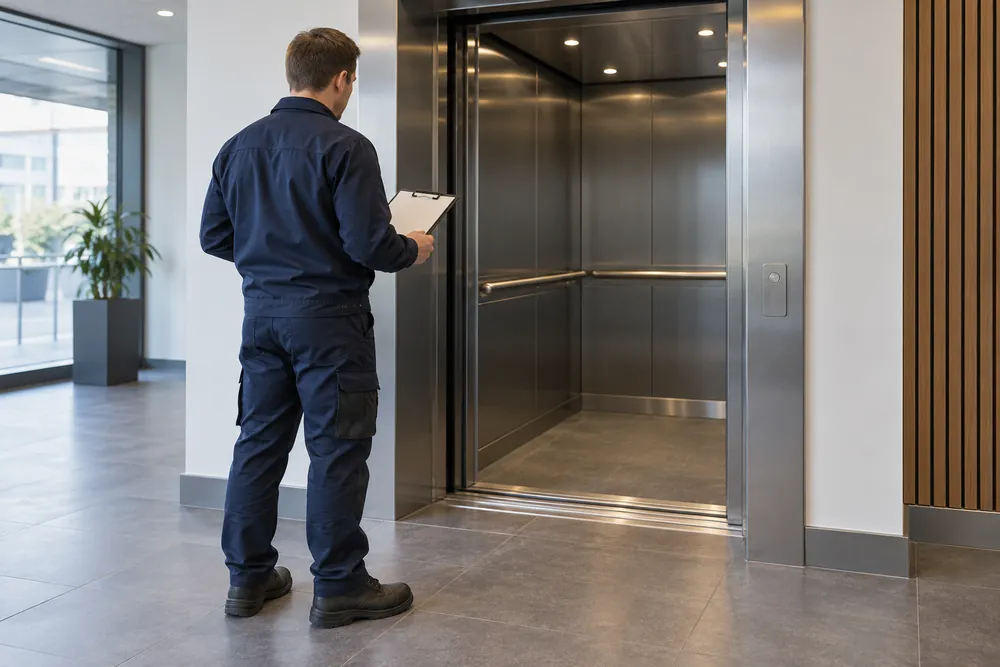
What A LOLER Lift Examination Means
A LOLER lift inspection in Manchester usually refers to a thorough examination under the Lifting Operations and Lifting Equipment Regulations 1998. It is a safety assessment of the equipment by a competent person. It is separate from a routine service, a repair visit or an everyday building check.
We help facilities managers, employers and managing agents prepare the information needed to arrange an examination. Tell us which lift is involved, when the current report expires and whether there are outstanding defects. This makes the enquiry useful before an appointment is discussed.
When An Examination Is Due
Unless a competent person's examination scheme sets different intervals, equipment used to lift people is examined every six months and other lifting equipment every twelve months. Examinations may also be needed after installation or exceptional events. These are examination intervals, not maintenance visit frequencies.
The HSE thorough examination guidance explains the applicable intervals and circumstances. Confirm the arrangement for your particular lift. Do not infer the next examination date from a maintenance sticker or from when the building last changed hands.
Who Should Examine The Lift
The competent person needs appropriate practical and theoretical knowledge and experience of the equipment. HSE also calls for sufficient independence and impartiality. The examination should not be undertaken by the same person who performs routine maintenance and would be assessing their own work.
Ask the proposed provider how that separation will be maintained. An examination may be arranged by a different organisation from the maintenance contractor. The important point for the building manager is that roles, reports and follow-up responsibilities are clear before the visit.
What To Prepare Before The Appointment
Gather the current and previous examination reports, maintenance records, lift identification and available technical information. Include details of recent repairs, changes or incidents. The person examining the lift needs a reliable history, especially if several providers have worked on the installation.
Confirm access to relevant machinery spaces and any permissions required by your premises. Discuss whether support from the maintenance contractor is needed. If keys or access arrangements are held by a third party, resolve that before the examination day rather than assuming reception can provide them.
A manager should be available to receive information about any defect. Agree who can authorise immediate restrictions and who will commission remedial work. In a multi-tenant building, that might involve both the managing agent and the organisation responsible for day-to-day access.
What The Examination Can Involve
The method and scope depend on the equipment and the competent person's judgement. Inspection, functional checks, measurement and other assessment may be appropriate. A thorough examination is not a promise that every installation will require the same test or a routine overload test.
Discuss any access or shutdown requirements before confirming the booking. The responsible manager should understand which areas need to be kept clear and how occupants will be informed. The equipment should be presented with its records, rather than as a lift number with no supporting information.
A Clear Examination Process
- Confirm the equipment identity, purpose, due date and relevant examination arrangements.
- Provide the records and agree the scope, access and any support requirements.
- Carry out the thorough examination with the planned site controls in place.
- Receive the report and make a clear list of defects, deadlines and observations.
- Commission any remedial work and confirm what is needed before continued use.
A report is a management document that needs action. Assign each item to someone with authority to progress it, and retain the associated evidence when it is addressed. Keep the original finding as well as the repair record so there is a clear audit trail.
Defects And Follow-Up Work
If the report identifies a dangerous defect, follow its restrictions and arrange the required action before further use. Some defects have a stated period for remedy. Read the actual report rather than treating every finding as the same type of recommendation.
For repairs, send the relevant finding through our lift repair enquiry route. Ask whether the proposed work changes the need for a further examination. Completing a repair does not automatically explain the return-to-use position unless the responsible competent person has addressed it.
Cost And Ongoing Planning
The number and type of lifts, access, required support and any additional assessment influence the quotation. Explain whether the lift is available for examination and whether another contractor needs to attend. Ask for the report and any related attendance to be identified in the proposal.
Use a shared building schedule to track examination dates separately from planned servicing. Review the schedule when contracts change or new equipment enters service. Clear ownership of the next action is more useful than relying on several providers to assume another party will arrange it.
LOLER Lift Inspections FAQs
Does Lift Servicing Include A LOLER Examination?
Lift servicing and a LOLER examination are separate activities with different purposes. A service addresses the agreed maintenance tasks, while a thorough examination assesses safety and produces its own report. Check both arrangements in writing, including how impartial examination will be provided and who is responsible for commissioning any remedial work.
What Should I Do With A Lift Examination Report?
A lift examination report should be reviewed by the responsible person and linked to the correct equipment record. Identify defects, restrictions and any stated deadlines, then arrange the required action. Keep repair evidence alongside the original report and seek clarification from the examiner if the position on continued use is unclear.